Ingrown toenails develop when the edge of a toenail grows into the surrounding skin, often causing pain, redness, swelling, and tenderness. Without proper care, the affected area may become infected and interfere with walking or daily activities. Here is an overview of the symptoms and treatment options for ingrown toenails:
Recognizing Early Warning Signs
Early signs of ingrown toenails tend to appear gradually, and you can identify them before the toe worsens. Watch the edges of the nail and the skin around it. If you notice several of these symptoms, act quickly. The following are some of the common indicators:
- Tenderness along the nail edge: The side of the toe feels sore when you press it or wear shoes.
- Redness and swelling: The skin near the nail looks inflamed, and puffiness may spread outward.
- Warmth around the toe: Heat in the area often signals early irritation or infection.
- Fluid or discharge: Clear fluid, or pus in later stages, points to an infection that needs attention.
- Overgrown skin: The skin may start to grow over the nail edge, which increases pressure and pain.
Identifying Causes and Risks
Several everyday habits contribute to ingrown toenails, and knowing them helps you reduce your risk. Cutting nails too short or rounding the corners encourages the nail to grow into the skin. Tight shoes press the toes together, and repeated pressure pushes the nail edge inward over time. Other factors also increase your risk. Toe injury, sweaty feet, and naturally curved nails can also play a role. People with diabetes or circulation problems must watch closely, because reduced blood flow slows healing and increases the risk of complications.
Managing Symptoms at Home
Mild cases sometimes respond to careful home care, but stop and seek help if pain worsens. These steps aim to ease discomfort while the toe settles. People with diabetes or circulation problems should skip aggressive self-treatment and contact a professional instead. The following approaches cover gentle options for early symptoms.
Soak and Clean Feet
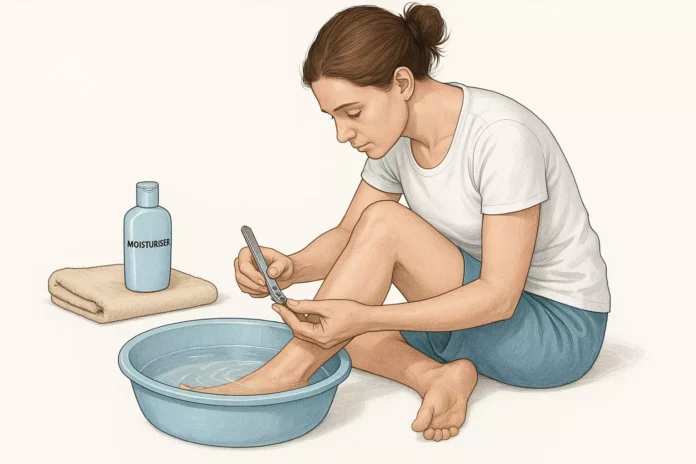
Warm water soaks can soften the skin, and this often eases pressure around the nail. Soak the foot for some minutes a few times each day, then dry the area well. Keep the toe clean, and avoid picking at the nail or skin. Clean cotton socks can help reduce moisture that feeds irritation.
Adjust Footwear for Comfort
Shoes that crowd the toes may worsen the problem, so choose wider footwear while the toe heals. Open-toe shoes or sandals reduce direct pressure, and they give the nail room to grow properly. Avoid high heels and narrow styles during recovery. Make sure your socks fit loosely enough to prevent extra squeezing.
Exploring Professional Treatments
When home care fails, or the toe shows signs of infection, a foot specialist can offer targeted treatment. A clinician may lift the nail edge, place a small barrier under it, or trim the ingrown portion to relieve pressure. For recurring cases, a partial nail removal can prevent the same edge from digging in again. Each option depends on how deep the nail has grown and how the toe responds.
Professional care becomes especially helpful for patients with diabetes or circulation issues. A specialist can assess blood flow, check for infection, and recommend a plan that protects the whole foot. Prompt evaluation lowers the risk of complications and gives you a clear treatment approach.
Treat Your Ingrown Toenails Today
Prompt treatment of ingrown toenails helps prevent complications and restore comfort. Addressing the issue early through at-home care or professional evaluation can reduce pain and mitigate risks, particularly for individuals with conditions like diabetes or poor circulation. Seeking timely care can help you manage this condition effectively and protect your overall foot health. To treat your ingrown toenails, contact a qualified foot specialist near you to schedule your appointment today.